TOEIC Part 5「-ed」と「-ing」の見分け方|名詞を見れば一瞬で解ける
なぜ多くの受験者が「-ed」と「-ing」で迷うのか
TOEIC Part 5では、次のような問題がよく出題されます。
The ______ news spread quickly among employees.
(A) surprised (B) surprising
surprisedとsurprisingは、どちらも見覚えのある単語です。それにもかかわらず、実際に選ぶ場面になると迷ってしまう受験者は少なくありません。
意味だけで判断しようとすると、「驚いた」なのか「驚かせる」なのかを日本語に訳して考えることになり、時間がかかります。
しかし、名詞と元の動詞の関係を確認すれば、訳に頼りすぎずに正解を素早く絞り込むことができます。
この記事では、名詞の前に置かれる-ed形と-ing形を見分ける基本的な考え方と、その判定方法を解説します。
判定の基本:名詞が「する側」か「される側」か
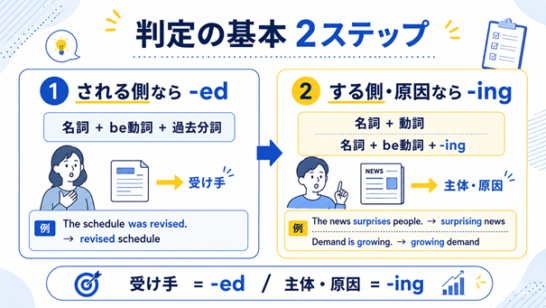
名詞の前に-edと-ingのどちらを置くか迷ったら、名詞と元の動詞の関係を確認します。
ポイントは、名詞が動作や感情の受け手なのか、それとも動作の主体や感情の原因なのかということです。
ステップ1:名詞が動作を「される側」か確認する
次の形の文を頭の中で作ります。
名詞 + be動詞 + 過去分詞
この文が自然に成立すれば、名詞は動作を「される側」にあり、-ed形が有力です。
The request was approved.
申請が承認された。
が成立するため、
an approved request
承認された申請
となります。ここではrequestがapproveという動作を受ける側なので、approvedを使います。詳しい用例は後半の各パターンでまとめて確認します。
ステップ2:名詞が動作を「する側」か確認する
次のような文を作ります。
名詞 + 動詞
または、
名詞 + be動詞 + 動詞-ing
この文が自然に成立すれば、名詞は動作の「主体」または感情の「原因」にあり、-ing形が有力です。
The instructions confuse users.
その説明は利用者を混乱させる。
が成立するため、
confusing instructions
分かりにくい説明
となります。また、自動詞の場合は次のように確認できます。
The market is expanding.
市場が拡大している。
が成立するため、
an expanding market
拡大している市場
となります。
つまり、基本的には次のように判断します。
- 名詞が動作や感情の受け手なら-ed
- 名詞が動作の主体、または感情を引き起こす原因なら-ing
なぜこの判定法が成り立つのか
-ed形と-ing形には、名詞との関係に違いがあります。
-ed形
-ed形は、名詞が動作や感情を受ける側であることを表すのが基本です。文に戻したときに「名詞が〜される」という関係になれば、-ed形を選びます。
-ing形
-ing形は、名詞が動作の主体である場合や、人に感情を引き起こす原因である場合に使われます。文に戻したときに「名詞が〜する」「名詞が人を〜させる」という関係になれば、-ing形を選びます。
したがって、「-edは人、-ingは物」と機械的に覚えるのではなく、名詞と元の動詞の意味関係を確認することが重要です。
パターン1:感情や心理状態を表す動詞
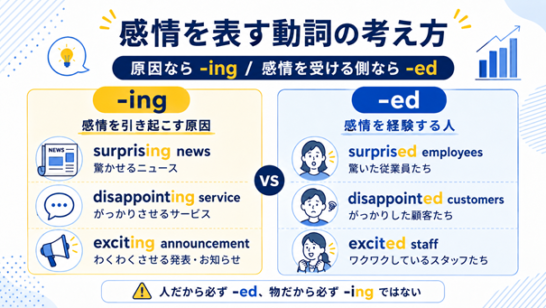
surprise、disappoint、excite、interest、encourage、convinceなど、人に感情や心理状態を引き起こす動詞はTOEICでよく出題されます。
これらの動詞では、次の関係が基本になります。
- 感情や心理状態を引き起こす原因:-ing
- その感情や心理状態を経験する人:-ed
surprising / surprised
surprising
surprising news
驚くべきニュース
surprising results
驚くべき結果
a surprising decision
意外な決定
a surprising increase
予想外の増加
a surprising announcement
驚くべき発表
確認:
The news surprised the employees.
そのニュースは従業員を驚かせた。
newsは驚きを引き起こす原因なので、surprising newsとなります。
surprised
surprised employees
驚いた従業員
surprised customers
驚いた顧客
a surprised manager
驚いた管理職
surprised participants
驚いた参加者
a surprised audience
驚いた聴衆
確認:
The employees were surprised by the news.
従業員はそのニュースに驚いた。
employeesは驚かされた側なので、surprised employeesとなります。
disappointing / disappointed
disappointing
disappointing sales
期待外れの売上
disappointing results
期待外れの結果
disappointing service
期待外れのサービス
a disappointing performance
期待外れの業績・出来
a disappointing response
期待外れの回答
確認:
The results disappointed the managers.
その結果は管理職を失望させた。
resultsは失望を引き起こす原因なので、disappointing resultsとなります。
disappointed
disappointed customers
がっかりした顧客
disappointed employees
失望した従業員
disappointed investors
失望した投資家
a disappointed client
がっかりした顧客
disappointed applicants
落胆した応募者
確認:
The customers were disappointed with the service.
顧客はそのサービスに失望した。
customersは失望させられた側なので、disappointed customersとなります。
exciting / excited
exciting
exciting news
わくわくするニュース
an exciting announcement
心躍る発表
an exciting opportunity
魅力的な機会
an exciting project
わくわくするプロジェクト
an exciting event
胸が高鳴るイベント
確認:
The announcement excited the staff.
その発表はスタッフを興奮させた。
announcementは興奮を引き起こす原因なので、exciting announcementとなります。
excited
excited employees
興奮した従業員
excited customers
わくわくしている顧客
excited participants
興奮した参加者
excited applicants
期待に胸を膨らませた応募者
an excited audience
興奮した聴衆
確認:
The staff were excited about the announcement.
スタッフはその発表に興奮した。
staffは興奮させられた側なので、excited staffとなります。
interesting / interested
interesting
an interesting proposal
興味深い提案
an interesting article
興味深い記事
an interesting presentation
興味深いプレゼンテーション
an interesting idea
面白いアイデア
an interesting opportunity
興味深い機会
確認:
The proposal interested the committee members.
その提案は委員たちの関心を引いた。
proposalは興味を引き起こす原因なので、interesting proposalとなります。
interested
interested applicants
興味を持っている応募者
interested customers
関心を持っている顧客
interested employees
興味を持っている従業員
interested investors
関心を示している投資家
interested participants
興味を持っている参加者
確認:
The applicants are interested in the position.
応募者はその職に興味を持っている。
applicantsは興味を経験する側なので、interested applicantsとなります。
encouraging / encouraged
encouraging
encouraging results
期待の持てる結果
encouraging signs
好ましい兆候
encouraging feedback
励みになる意見
an encouraging response
前向きな回答
encouraging progress
順調な進展
確認:
The results encouraged the project team.
その結果はプロジェクトチームを勇気づけた。
resultsは人を励ます原因なので、encouraging resultsとなります。
encouraged
encouraged employees
励まされた従業員
encouraged applicants
勇気づけられた応募者
encouraged participants
励まされた参加者
encouraged managers
手応えを感じた管理職
encouraged team members
勇気づけられたチームメンバー
確認:
The team members were encouraged by the results.
チームメンバーはその結果に勇気づけられた。
team membersは励まされた側なので、encouraged team membersとなります。
convincing / convinced
convincing
convincing evidence
説得力のある証拠
a convincing explanation
説得力のある説明
a convincing argument
説得力のある主張
a convincing presentation
説得力のあるプレゼンテーション
a convincing proposal
説得力のある提案
確認:
The evidence convinced the committee.
その証拠は委員会を納得させた。
evidenceは人を納得させる原因なので、convincing evidenceとなります。
convinced
convinced customers
納得した顧客
convinced investors
納得した投資家
convinced managers
確信した管理職
convinced committee members
納得した委員
a convinced client
納得した顧客
確認:
The committee members were convinced by the evidence.
委員たちはその証拠に納得した。
committee membersは納得させられた側なので、convinced committee membersとなります。
人なら必ず-ed、物なら必ず-ingではない
感情を表す動詞では、感情の原因となる物や出来事に-ing、感情を経験する人に-edが使われることが多くあります。
ただし、人だから必ず-ed、物だから必ず-ingになるわけではありません。
an inspiring leader
人を奮い立たせるリーダー
a boring speaker
退屈な話し手
damaged goods
破損した商品
a closed store
閉店している店舗
重要なのは、人か物かではなく、その名詞が動作や感情の原因なのか、それとも受け手なのかという点です。
パターン2:一般的な動詞の受け身と能動
次に、renovate、revise、estimateのような一般的な動詞を見てみましょう。
これらの場合も、名詞が動作をされる側か、動作をする側かを確認すれば判断できます。
例1:renovated building
renovated building
改装されたビル
確認:
The building was renovated.
ビルが改装された。
buildingは改装される側なので、renovated buildingとなります。
例2:revised schedule
revised schedule
修正されたスケジュール
確認:
The schedule was revised.
スケジュールが修正された。
scheduleは修正される側なので、revised scheduleとなります。
例3:estimated cost
estimated cost
見積もられた費用
確認:
The cost was estimated.
費用が見積もられた。
costは見積もられる側なので、estimated costとなります。
例4:completed application
completed application
記入済みの申込書
確認:
The application was completed.
申込書が記入された。
applicationは記入される側なので、completed applicationとなります。
例5:damaged equipment
damaged equipment
損傷した設備
確認:
The equipment was damaged.
設備が損傷した。
equipmentは損傷を受ける側なので、damaged equipmentとなります。
TOEICでは、次のように名詞が動作を受ける側となる-ed形がよく出題されます。
- revised schedule
- estimated cost
- renovated building
- damaged equipment
- completed application
パターン3:名詞が動作の主体になる-ing
一般的な動詞でも、名詞が動作の主体になる場合は-ing形を使います。
例1:growing demand
growing demand
増加する需要
確認:
Demand is growing.
需要が増加している。
demandは増加する主体なので、growing demandとなります。
例2:rising costs
rising costs
上昇する費用
確認:
Costs are rising.
費用が上昇している。
costsは上昇する主体なので、rising costsとなります。
例3:declining sales
declining sales
減少している売上
確認:
Sales are declining.
売上が減少している。
salesは減少する主体なので、declining salesとなります。
例4:participating companies
participating companies
参加企業
確認:
The companies are participating in the event.
その企業はイベントに参加している。
companiesは参加する主体なので、participating companiesとなります。
例5:remaining seats
remaining seats
残っている座席
確認:
Several seats remain.
いくつかの座席が残っている。
seatsは残っているものなので、remaining seatsとなります。
このように、-ing形は感情を引き起こす原因だけでなく、名詞自身が動作している場合にも使われます。
TOEICでよく出る組み合わせ
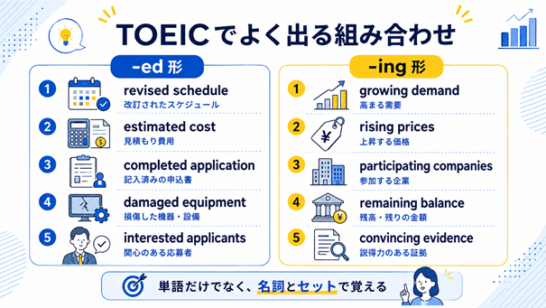
TOEICでは、次のような-ed形と-ing形の組み合わせがよく使われます。
-ed形
revised schedule
修正された予定
estimated cost
見積もられた費用
completed form
記入済みの用紙
damaged equipment
損傷した設備
interested applicants
興味を持っている応募者
satisfied customers
満足した顧客
disappointed investors
失望した投資家
excited participants
興奮した参加者
encouraged employees
励まされた従業員
convinced committee members
納得した委員
-ing形
growing demand
増加する需要
rising prices
上昇する価格
participating companies
参加企業
remaining balance
残高
surprising results
驚くべき結果
disappointing service
期待外れのサービス
exciting opportunity
魅力的な機会
interesting proposal
興味深い提案
encouraging results
期待の持てる結果
convincing evidence
説得力のある証拠
これらを単語単体ではなく、名詞とセットで覚えておくと、Part 5で素早く判断できるようになります。
練習問題
最後に、実際に判定法を使って解いてみましょう。
例1
The ______ results of the survey were shared with the entire team.
(A) surprised (B) surprising
名詞を確認し、次の文を作ります。
The results surprised the team.
その結果はチームを驚かせた。
resultsは驚きを引き起こす原因なので、-ing形を使います。
正解は、(B) surprisingです。
surprising results
驚くべき結果
例2
All ______ employees may attend the workshop.
(A) interested (B) interesting
名詞を確認し、次の文を作ります。
The employees are interested in the workshop.
従業員はその研修に興味を持っている。
employeesは興味を経験する側なので、-ed形を使います。
正解は、(A) interestedです。
interested employees
興味を持っている従業員
例3
The manager reviewed the ______ proposal before the meeting.
(A) revised (B) revising
名詞を確認し、次の文を作ります。
The proposal was revised.
提案書が修正された。
proposalは修正される側なので、-ed形を使います。
正解は、(A) revisedです。
revised proposal
修正された提案書
例4
The company is responding to ______ demand for its new product.
(A) grown (B) growing
名詞を確認し、次の文を作ります。
Demand is growing.
需要が増加している。
demandは増加する主体なので、-ing形を使います。
正解は、(B) growingです。
growing demand
増加する需要
例5
The company received several ______ comments from customers.
(A) encouraged (B) encouraging
名詞を確認し、次の文を作ります。
The comments encouraged the employees.
その意見は従業員を励ました。
commentsは励ます原因なので、-ing形を使います。
正解は、(B) encouragingです。
encouraging comments
励みになる意見
例6
The committee found the evidence highly ______.
(A) convinced (B) convincing
名詞を確認し、次の文を作ります。
The evidence convinced the committee.
その証拠は委員会を納得させた。
evidenceは人を納得させる原因なので、-ing形を使います。
正解は、(B) convincingです。
convincing evidence
説得力のある証拠
まとめ:名詞と動詞の関係から判定する
-ed形と-ing形のどちらを選ぶか迷ったときは、日本語訳だけで判断するのではなく、名詞と元の動詞の関係を確認してください。
判断の基本は次のとおりです。
- 名詞が動作や感情の受け手なら-ed
- 名詞が動作の主体、または感情の原因なら-ing
まず「名詞 + be動詞 + 過去分詞」が成立するかを確認し、成立しなければ「名詞 + 動詞」または「名詞 + be動詞 + 動詞-ing」が成立するかを考えます。
特に、次のような語はTOEICで繰り返し出題されます。
- surprising / surprised
- disappointing / disappointed
- exciting / excited
- interesting / interested
- encouraging / encouraged
- convincing / convinced
また、ビジネスでよく使われる-ed形・-ing形は、単語だけでなく名詞との組み合わせで覚えると効果的です。
次にPart 5で-edと-ingの選択肢を見たら、まず名詞を確認し、その名詞が「する側」なのか「される側」なのかを考えてみてください。それだけで、正解をより速く、正確に絞り込めるようになります。
Follow me!